<iframe src="https://www.googletagmanager.com/ns.html?id=GTM-KQ3FZBL" height="0" width="0" style="display:none;visibility:hidden">
Skip to content
  • cyient-case-study-banner cyient-case-study-banner
    Retinal Prosthesis Chip for
    Vision Restoration
    512-electrode neural stimulation implant

Restoring vision for a range of people who are fully blind requires an eye-implant capable of delivering extremely precise electrical stimulation directly to the retina. To make this possible, every component of the implant must be ultra-compact, power-efficient, wirelessly powered, and able to drive a dense matrix of electrodes with safe, controlled current pulses.

Cyient Semiconductors provides a fully integrated ASIC that forms the core of an implantable retinal stimulation system. The chip supports wireless power and data transfer, high-channel-count stimulation, and stringent safety monitoring - all within a miniature form factor suitable for long-term use inside the eye
.

At the core of connected industry

Group 1304

Smart metering (gas/water/electricity)

Group 1338
Smart metering (gas/water/electricity)

Secure, low-power communication for real-time utility monitoring

Group 1351-1

Time-of-flight
for robotics

Group 1351
Time-of-flight
for robotics

Precision sensing for navigation and obstacle detection in automation

Group 1352-1

Lighting, building automation, and HVAC

Group 1352
Lighting, building automation, and HVAC

Fire detection, CCTV/video surveillance cameras, intruder alarm, thermostats & controls

Group 1353-1

NFC and RFID systems

Group 1353
NFC and RFID systems

Seamless smart infrastructure integration with telecom expertise

Group 1354-1

Encoders for robotics

Group 1354
Encoders for robotics

High-precision motion control for automation and industrial robotic applications

Group 1358-1

Test equipment

Group 1358
Test equipment

Automated test equipment for semiconductors, digital multimeters, network analyzers, digital oscilloscopes

Group 1355-1

Factory automation & control

Group 1355
Factory automation & control

Flow, level, pressure, and temperature measurement

Group 1356-1

Motor drives

Group 1356
Motor drives

AC variable speed drives, DC drives, servo drives, stepper drives, soft starters/brakes

Group 1357-1

Power & energy

Group 1357
Power & energy

AC/DC supplies, converters, inverters, battery chargers, UPS, generators, and renewable energy (hydro/solar/wind)

Success in action

How we’ve helped leaders in Industry 4.0 and robotics
Mask group

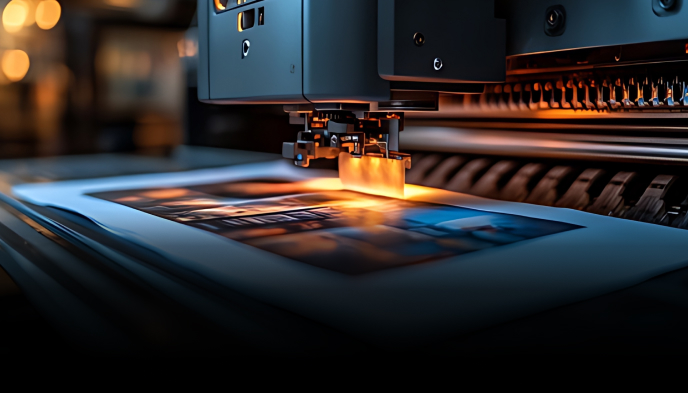
LED driver array for industrial printers

Designed an advanced LED driver array using TSMC 0.18µm technology, enhancing industrial printing with precise current control and on-chip diagnostics.

Mask group-2

Laser distance measurement system for Industry 4.0

Developed a System-on-Chip (SoC) for laser distance measurement with precise laser driver pulse steering and a Transimpedance Amplifier (TIA) photodiode front end, achieving accurate distance measurements for automation and manufacturing.

Mask group-4

High precision GPS receiver

Designed a high-precision GPS receiver using TSMC 65nm technology, ensuring accurate location tracking even in challenging environments, enabling applications like surveying and asset tracking.

Mask group-1-1

Smart metering with acoustic front end

Developed an ultra-sound transceiver using TSMC 0.18µm CMOS technology for accurate flow metering and acoustic sensing, enabling precise water, heat, and electricity usage measurement in smart meters.

Mask group-3

High-performance EPC Gen2 RFID UHF reader
Developed a highly integrated RFID reader IC suitable for fixed and mobile applications. The complete UHF radio transceiver is integrated on-chip, including the digital modem and an ARM Cortex M0+ core. The design features a low-noise, high-linearity optimized receiver to support backscattering communication, ensuring reliable performance in diverse environments.

From design to silicon:
full-spectrum semiconductor expertise

Custom semiconductor design and turnkey ASIC solutions, built for Industry 4.0 and robotics

SDS Fulll bleed card

The requirements

Developing an implantable retinal prosthesis introduces unique challenges:

  • Accurate current-based stimulation across hundreds of electrodes
  • Ultra-compact silicon footprint suitable for in-eye implantation
  • Wireless inductive power transfer at medically safe levels
  • High-speed bi-directional wireless data link for video data transfer, configuration and monitoring
  • Minimal external components to reduce surgical complexity
  • Temperature and current monitoring to protect retinal tissue
  • Reliable operation within strict thermal and mechanical constraints
These requirements ensure the implant delivers controlled neural activation while remaining safe and biologically compatible.
ASIC turnkey (1) Fulll bleed card (1)

Bringing the solution to life

Cyient Semiconductors has developed a highly integrated mixed-signal ASIC that manages power delivery, communication, and stimulation for the entire retinal implant. From wireless power coupling to programmable stimulation currents, every subsystem is optimized for predictable, safe neural activation.

Key Features:
  • Wireless power link at 135.5 kHz with on-chip DC/DC conversion
  • Bi-directional wireless data link at 13.56 MHz (OOK, 400 kbps)
  • 32 programmable stimulation units driving a total of 512 electrodes
  • On-chip data decryption, clock recovery, and low-jitter PLL
  • Temperature monitoring and current sensing for calibration and safety
  • Full analog + digital integration supporting complete top-level system control

The ASIC operates efficiently with very few external components, enabling a compact implant design that minimizes surgical footprint and maximizes patient comfort.

Where it’s used today

This stimulation ASIC is central to next-generation retinal prosthesis systems, supporting:

•    Safe, precise activation of retinal neurons
•    Miniaturized implant designs for long-term biocompatibility
•    Wireless communication between implant and external controller
•    Early clinical trials demonstrating functional vision restoration

Its combination of high channel count, low power consumption, and robust wireless links makes it a critical building block for restoring visual perception in blind patients.

Need specialized silicon for
industrial automation?